MADE AT AIR
Making Music in Bali: What a Monitor and Studio Speakers Teach You About Your Own Sound
There's a moment, usually day four or five, when you stop hearing Ubud and start hearing your mix again. The motorbikes pass. The roosters sing at all hours. Cicadas at sunset. None of it bothers you because you're listening to something else—the frequencies you've been stacking for the past week, the space between the drums and the vocal, whether the reverb is honest or defensive.
Making music away from home is not the same as making music at home. The stakes feel different. The room has a different resonance. Your ears adjust differently. And the place itself—the light, the heat, the rhythm of the place—seeps into the work whether you intend it to or not.
The practical setup matters first. Proximity to good speakers makes the difference between guessing at your mix and actually hearing it. Laptop speakers lie. Phone speakers lie. Cheap monitors lie in a way that sounds intimate until you hear the track elsewhere and realize you've been mixing in the mud. A real monitor, one that shows you the frequency balance without flattery—that changes everything. You hear the kick clearly. You hear where the vocal sits. You hear the harshness you've been ignoring.
Some of the rooms at AIR have a monitor and Yamaha studio speakers built in. It's not a professional studio. It's not a mixing room with acoustic treatment and a $50,000 setup. But it's accurate enough that you can make real decisions. You can hear what you actually made, not what you hoped you made. That's the baseline for doing work that means something.
The standing desk matters too, though not the way you'd think. It's not about posture or health—though both help. It's about the position of your ears relative to the speakers. When you sit, you hear from one angle. When you stand, you move through the space and hear how the sound changes from six feet away versus three. You stand back and listen for impact. You lean in and listen for detail. The physical flexibility of the setup is the flexibility of your listening.
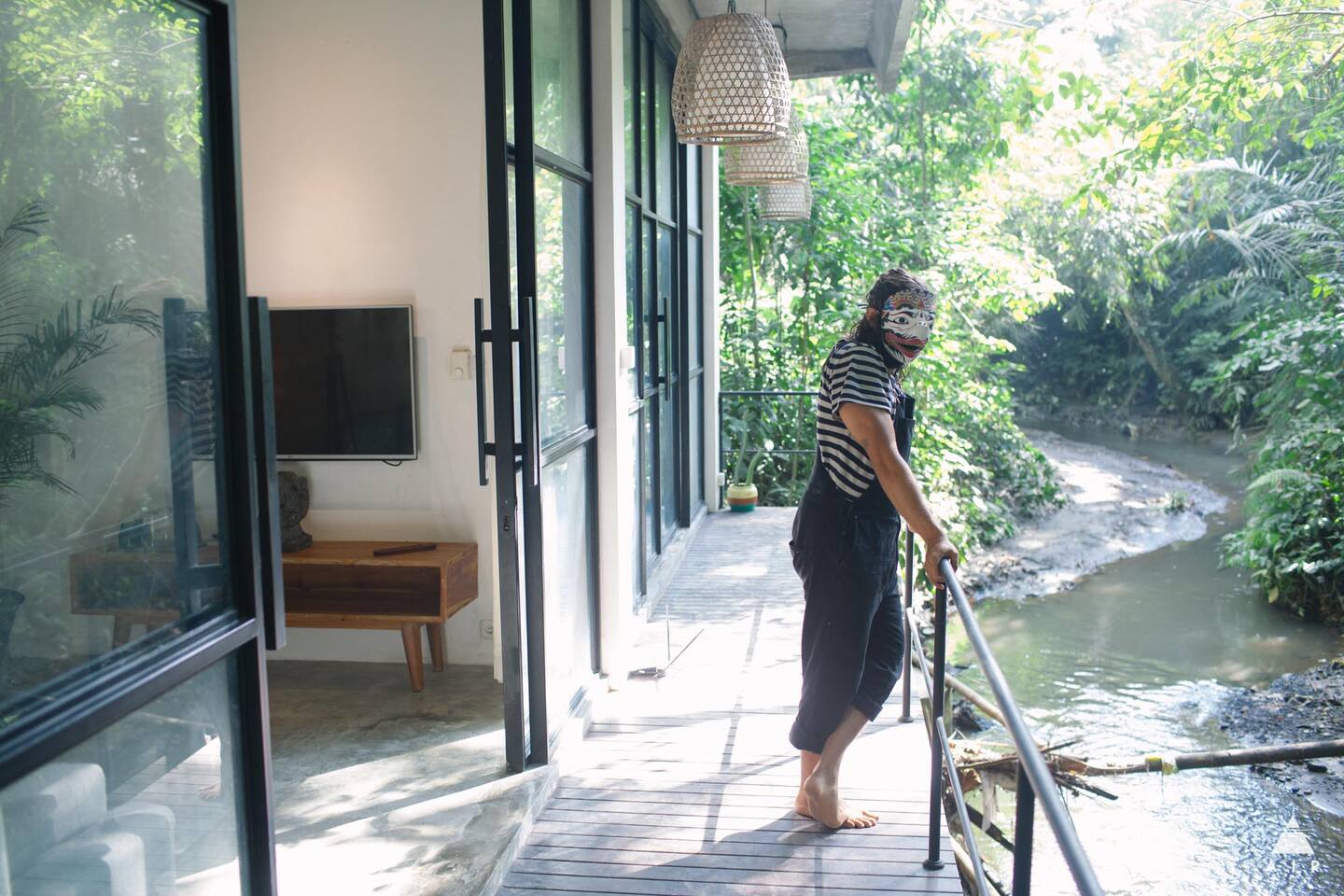
Now the place. Ubud is not quiet in the way a recording studio is quiet. There's life happening. What this means for your work is: you have to finish it somewhere else. You can't rely on isolation to carry the piece. Every arrangement choice has to justify itself. Every element has to earn its presence. The clutter of the place teaches you something about the clutter in your mix.
The light changes your energy, which changes your energy in the room, which changes your listening. Morning light in Ubud is generous and gold. Your ear is fresher. Harsh EQ choices that felt fine at midnight suddenly sound aggressive. You trim it back. By afternoon, the light is white and even. The work clarifies. You hear fatigue in the vocal. You fix it. At sunset, everything is warm and forgiving again. You finish the day with the good feeling of day-end, even if the mix isn't objectively done.
Place shapes what you make in ways you can't predict. It's not that Ubud teaches you to make a specific kind of sound. It's that the pace of the place—the way mornings happen, the heat, the accessibility of walking and eating well, the absence of your usual obligations—creates conditions where a certain kind of thinking is possible. You're not fighting the clock. You're not checking your email between sessions. You're not tired from a day job. The space your mind occupies is different. And that space is where the music lives.
The isolation is real, but it's psychological, not acoustic. You're surrounded by people. What's absent is the people who would interrupt you, distract you, or make you defend the work. You can play a track loud. You can keep a section looping while you sit with it and think. You can mute everything and sit in the room in silence for ten minutes without anyone asking what you're doing. That permission is the luxury.
Some musicians come to make a finished thing. Some come to sketch ideas. Some come to finally hear a demo the way a listener will hear it, without the intimacy of having written it blinding them. A good monitor lets you separate yourself from your attachment. You hear the work as an object, not as an expression of yourself. That's harder than it sounds. The moment you're removed from the daily world, it becomes possible.
The heat matters, too, though not poetically. You sweat. Your coffee cools fast. The humidity makes the air feel thicker, which changes how you imagine sound moving through space. You're not going to record here (the ambient noise is real), but you're going to mix, arrange, and listen. The conditions of the place keep you clear about what your work is supposed to do: it's supposed to move through the real world, not a treated room.

By the second week, you've built a rhythm. You work until you're tired, not until a clock tells you to stop. You take breaks that are actual breaks—walks, meals, sitting in a chair without a laptop. You come back to the work fresh. The speakers are still there. The monitor is still showing you what you actually made. The room is still the temperature it is. None of these factors change, so you do. The work shifts. Details sharpen. You trust your ear more.
There's a difference between finishing a track and living with it for seven days. Seven days teaches you things that mixing sessions don't. You hear it in the morning when your ears are fresh. You hear it at the end of the day when you're tired. You hear it when you've been away from it and come back. You hear it when you're not trying. Ubud gives you that time. The absence of urgency makes the work slower and deeper.
One of the last things that happens is the moment you stop thinking of the work as something you're building and start hearing it as something that exists. The arrangement is done. The levels are set. The reverb is right. You play it back and it moves you, or it doesn't, but either way it's finished. That separation—between the maker and the made thing—is what you came for. Place makes that separation possible. A good desk. A monitor. Room to sit. Time.
When you leave, you'll have a track or a set of ideas that will translate. The monitors got out of the way. The place got into the work. And you'll know what you sound like when no one is listening—which is exactly what you came to find out.