CREATIVITY
Ubud as a Writer's Retreat: What Happens When You Trade Routine for Ritual
You arrive with a schedule and leave with a manuscript. Or you arrive with a draft and leave with 40,000 new words. Or you sit in a loft above a valley for two weeks and write nothing publishable but discover what your voice sounds like when no one's listening.
Ubud gets romanticized as a writer's retreat the way Hemingway gets quoted—selectively and wrong. The myth is: you go, it's quiet, the words flow. The truth is messier and more useful.
The actual mechanics work like this. You arrive jetlagged and disoriented, which sounds bad but isn't. Your nervous system is reset. The morning light comes at a different angle. You don't know where to get coffee, so you stop looking for the perfect coffee and just drink what's here. Small frictions evaporate; the meta-layer of your life—the admin, the scrolling, the proximity to your actual job—evaporates with them. What remains is the work.
The quiet isn't acoustic. It's relational. You don't know anyone here. No one is asking you anything. There are no obligations except to yourself and a blank page.
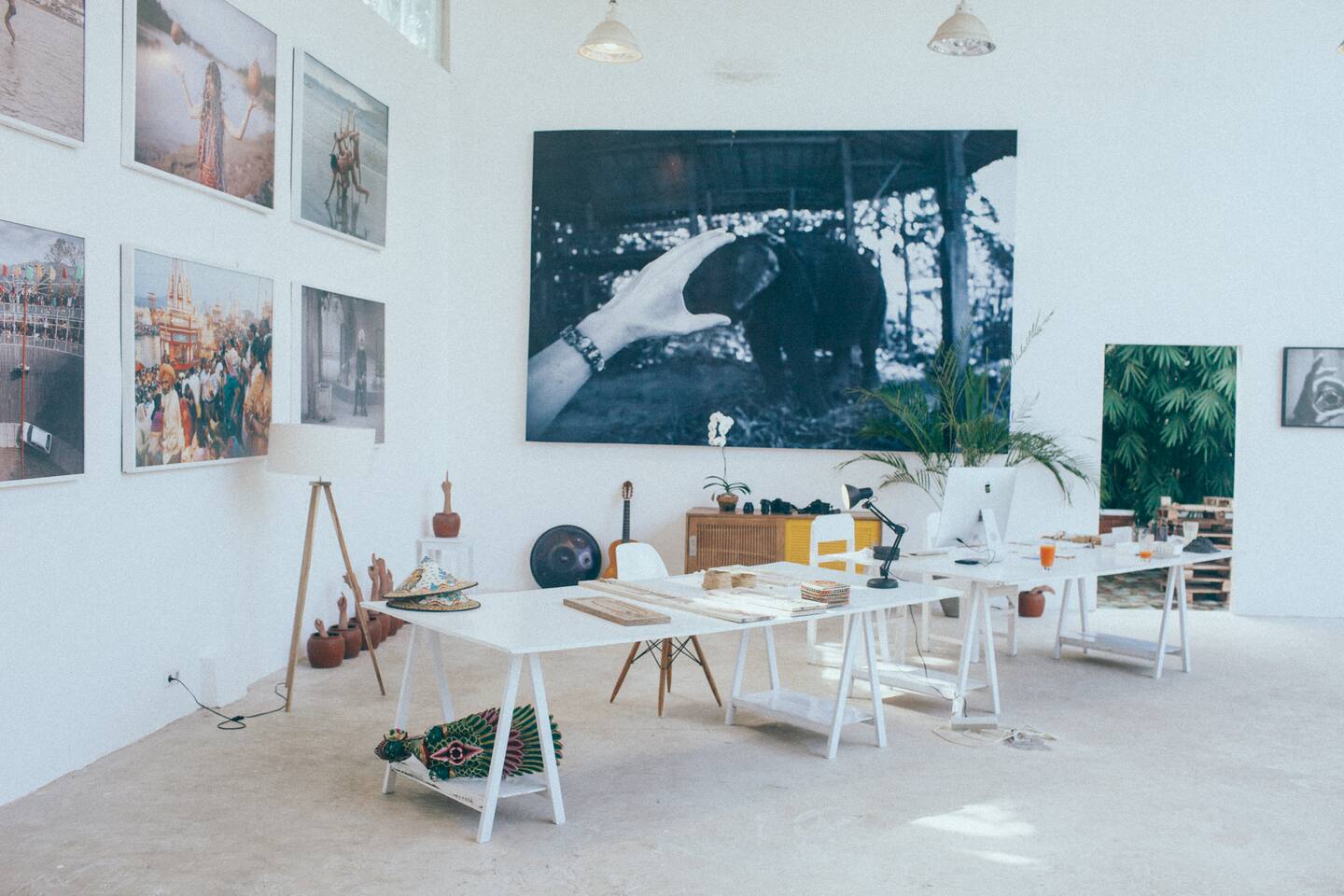
This is what Ubud offers: permission to be a person who sits and thinks for eight hours without explanation or apology. At home, that looks like avoidance. Here, it's the entire point. You've paid money to be here. The visa says you're here to work. The desk you rented has a monitor. The schedule is clean. Every morning you know what you're doing.
The rhythm builds fast. Day one is logistics—SIM card, cash, the path down to the warung. By day three, you're working six hours before lunch. By day five, you're the person at the desk at 5:45 a.m., waiting for the light to change so you can see what you wrote yesterday. The body adjusts. The mind stops looking for distractions because the good distractions aren't available. You can't grab a drink with a friend. You can't check the news. You can't call someone back. The easiest thing is the hardest thing: sit down and write.
This isn't about being isolated. Ubud has everything: good food, conversation, walks, coffee that people here actually care about. But it's all secondary. You come to a writers' retreat because the default is work, not leisure. The default is solitude, not community. The meetings, if they happen, are scheduled and finite. Everything else is negotiable.
The geography helps. You're 12 hours ahead of most of your readers. The writers you respect are asleep. Email is background noise by the time you start working. Your phone still has all its notifications, but they're happening in a timezone where you've decided you're not there. It's a useful lie—your brain knows it's true even though it isn't.
The physical space matters more than the marketing suggests. A good desk is not optional. A chair that lets you sit for six hours is not optional. Natural light is not optional. A monitor, if you work digitally, is not optional. This is where the budget should go. Not the view (nice but not necessary), but the ergonomics of actual work. You're sitting in this chair for eight hours a day for two weeks. Make it good.
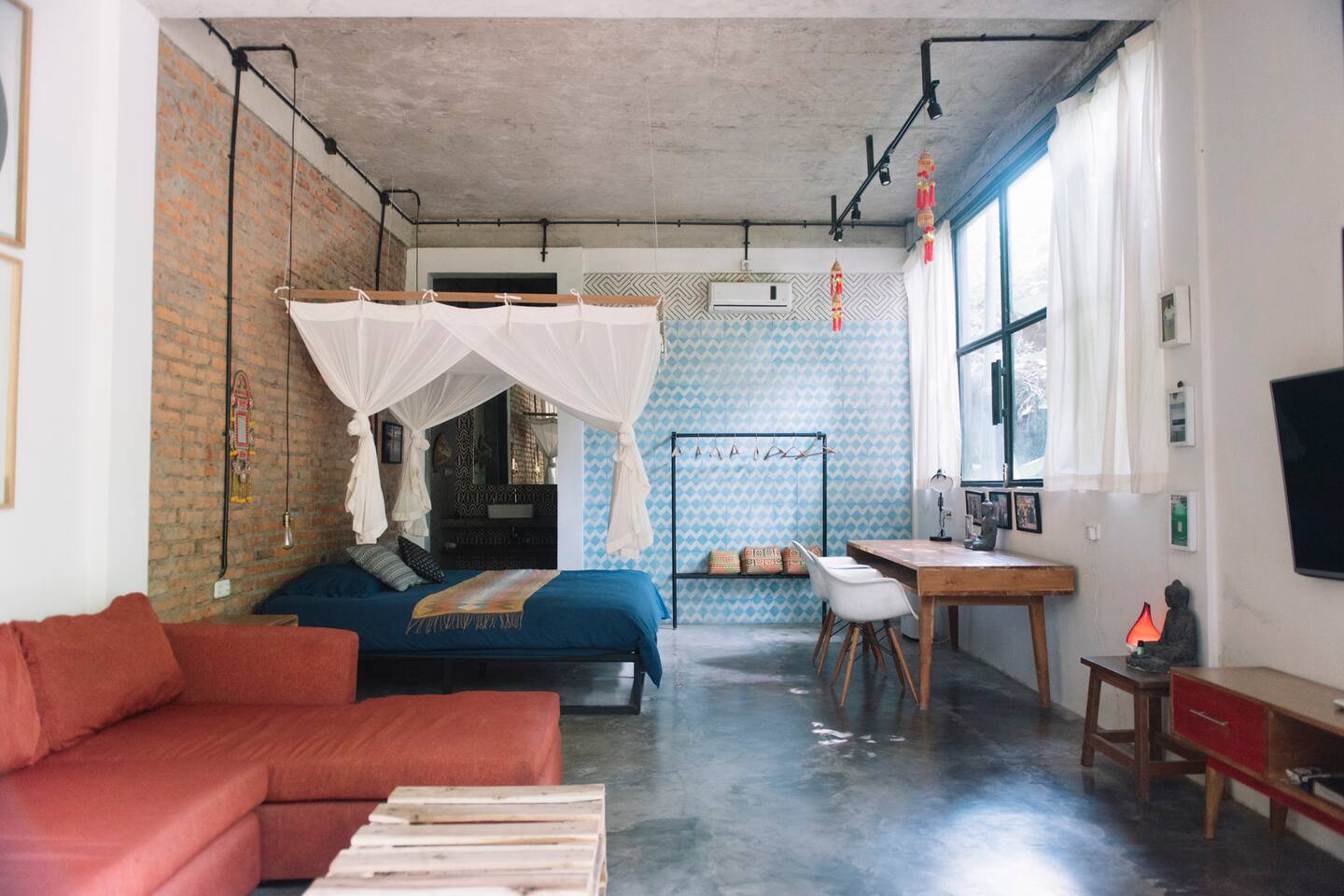
Some writers come for speed—the sprint toward a deadline. Some come for excavation, the slow business of untangling what a story or character is really about. Both work in Ubud, but for different reasons. The sprint works because the default silence keeps you moving. The excavation works because there's time. Two weeks without your regular life is enough time to let an idea sit and breathe.
The hardest part isn't writing. It's the first three days, when your brain is still in your home timezone and your body hasn't adjusted to the humidity. There's jet lag, plus the ambient low-level grief of being far from people you love, plus the weight of a blank page that now has no excuses around it. You went to a lot of trouble to be here. You spent money. You told people you were working. On day two, that lands fully. Some writers push through it. Some sit with it. Both approaches eventually lead to the desk.
There's a particular clarity that arrives on day five or six. You've stopped checking whether you're being productive. You've stopped measuring the work against external standards. You're just writing—following a sentence to see where it goes, building on what you wrote yesterday, letting the rhythm of the words guide your thinking. The work becomes smaller and more real at the same time. You're not writing a book. You're writing tomorrow's page. That's all. This is the gift of the retreat: permission to think at the speed thinking actually happens, without an audience looking over your shoulder.
The romantic version of a writer's retreat is the writer in a cottage, alone in the woods, supplied by villagers who leave food at the door. Ubud isn't that. It's a town, a place where thousands of people are living and working. But it's a town where you're not known, where the default is work, where the infrastructure exists to support someone who wants to sit and write. You can eat in a restaurant by yourself and no one questions it. You can walk the same path every morning. You can become a small, predictable thing in a large place. And in that smallness, the work becomes possible.
After two weeks, you'll have written pages. Some of them will be good. Some will be scaffolding, the necessary bones of the thing. All of it will have come from the simple fact that you sat down, day after day, with nothing to do but the one thing you came to do. That's the retreat. Not the place. The permission.