UBUD
Working from Ubud's cafés: when a laptop table is enough (and when it isn't)
The Ubud café-work culture is real and it's everywhere. Any café with an outlet and a table will fill with laptops during daylight hours. It's a social ecosystem: creatives, digital nomads, tourists pretending to work, students, local teenagers doing homework. This is normal and it works — until it doesn't. The question isn't whether to try it, but when to stop.
First, the logistics. Most cafés in central Ubud (the main street, Monkey Forest Road, the junction near the market) have wifi that is 'fine' — meaning it loads pages, handles email, works for Zoom if no one else is on it, and occasionally drops. It's usually complimentary; you're expected to buy something. A cappuccino or juice is €3–6. Work for four hours, buy a drink, and you've got your table. Many do exactly this, every day. It's a valid way to structure a morning.
The better cafés are: (1) places that are cafe-first, office-second — design-conscious, quieter, with good seating and power outlets near most tables; (2) places that know their regular workers and let them set up properly — bring a keyboard, use a laptop stand, stay until closing without buying another drink every two hours; (3) places that accept 'this is your workspace for a few hours' without making it weird. They exist. Most have a reputation among the local work community.
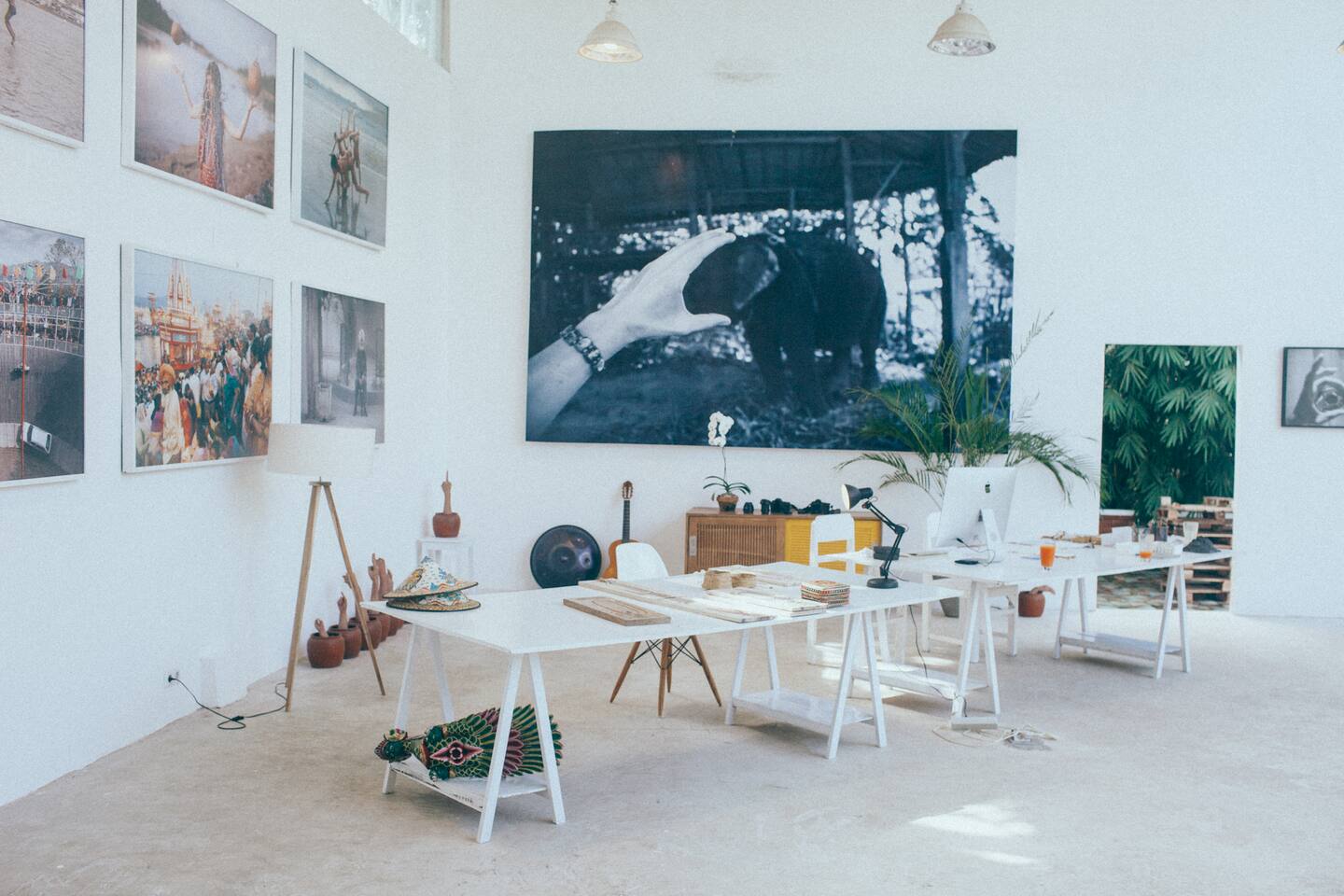
What cafés struggle with: reliability. A café can be perfect for a week and then the wifi goes down for a day, or a tour group of thirty people arrives and the wifi drops because too many devices are on it. If you have a client call at 2 PM, betting on café wifi is a gamble. The electricity can also be unstable — power cuts happen, especially in the rainy season. If you're on battery, you're fine. If you're running a live meeting and your power drops, you're not.
Etiquette matters more than people think. A few rules that keep you welcomed: (1) Don't monopolize a table during peak hours. Café peak is usually 10 AM–1 PM and 3 PM–5 PM. Work early or late if you need continuity. (2) Buy something every hour or two — it's their business, and you're using the space. (3) Keep your setup compact. Don't spread a whole desk across a two-person table. (4) Keep headphones on if you're on calls or playing music. (5) Don't use the café as a base to coordinate ten Zoom meetings a day. Once or twice is fine; hourly meetings mean you need a private space.
There's a psychological trade-off too. Café work feels productive because you're surrounded by other people working — the ambient focus helps. But it's also a performance. You're aware of being watched, or not, or other people being aware of you. Some people thrive on this. Others find it exhausting. After a few weeks of daily café work, many people report that the novelty wears off and they actually get less done — too many breaks to chat, too much phone scrolling because it's easier than closing your eyes, too much ambient noise.
The noise question is specific to what you're making. If you're writing prose, responding to email, doing design in a focused way, café ambient sound usually helps — it's consistent white noise. If you're brainstorming, writing code, having calls, or doing detailed work that requires unbroken attention, a café is often worse than useless. You'll go slow, make mistakes, have to redo things when you get somewhere quiet. Know which kind of work you're doing and choose the environment accordingly.
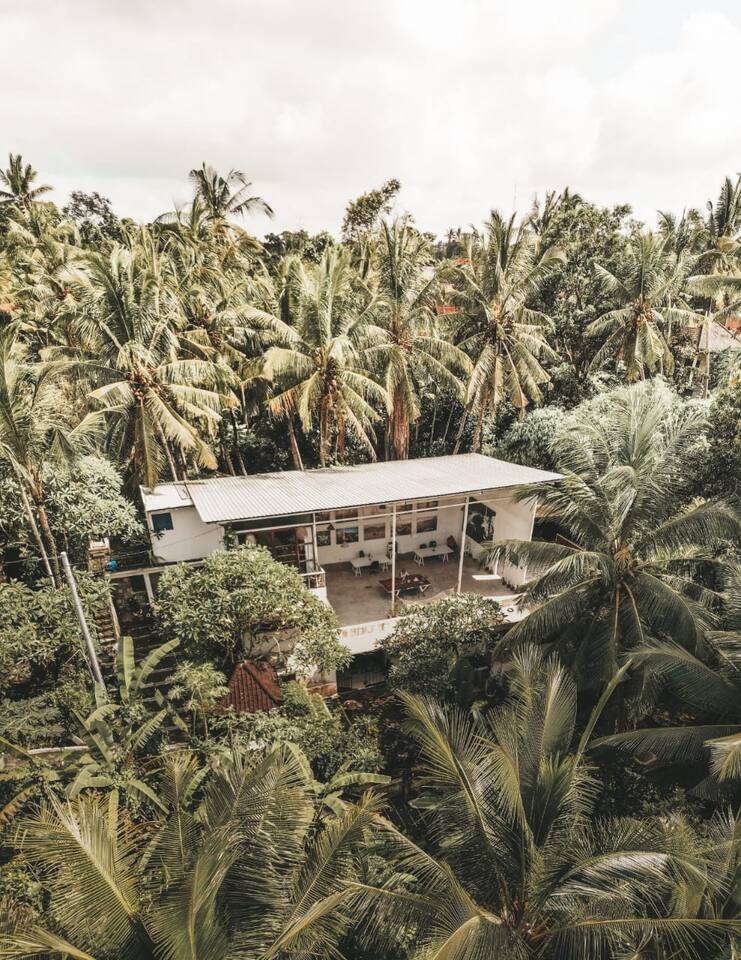
The real calculus: a morning or afternoon at a café is free or cheap and it breaks the monotony of a room. If you're staying in a shared house or a tight rental, a few hours daily in public space is sane and grounding. But if you're in Ubud for weeks and you have real work — actual client work, manuscript work, work you're being paid for — café work will eventually frustrate you. The wifi will fail at a critical moment. You'll lose an hour because you had to repeat a call. You'll get interrupted. The cost of one failure is usually more than the cost of renting a proper desk.
That's where having options matters. If you're staying at a residency or a place with a shared studio (like AIR, where guests have access to actual workspace), you already have an escape hatch — a quiet desk, reliable power, real internet. You can work from the café when it's convenient and from the studio when you need focus. If you're in a room-only rental and you can't afford studio space, you're betting daily on café wifi and comfort, which works until it doesn't.
One more thing: the café-work rhythm is social by design. If you're alone in a new city and desperate for human contact, café culture is one answer. You'll chat with other people at tables, you'll become a regular, you'll start recognizing the same faces. This is genuinely valuable — it's one of the reasons people move to Ubud. But if you're someone who works best in isolation, or who gets drained by ambient socializing, don't force it. Spend your money on a better room or a quiet space instead.
The closing truth: working from a café in Ubud is cheap, real, and it works for some people and some projects. It's also a temporary solution. If you're staying for a week, it's perfect. If you're staying for a month and you have serious work, budget for better. A €50–100 a month studio spot (shared space, often with other people) or a room with a proper desk and a door that closes will return more focus, fewer failed calls, and actual momentum on what you came to work on. Both lives are available to you here. Choose the one that matches your work, not just your budget.